
Man’ousheh: a Lebanese morning
Warm bread, fragrant zaatar and time for a conversation: a closer look at a much-loved Lebanese breakfast.
In this story
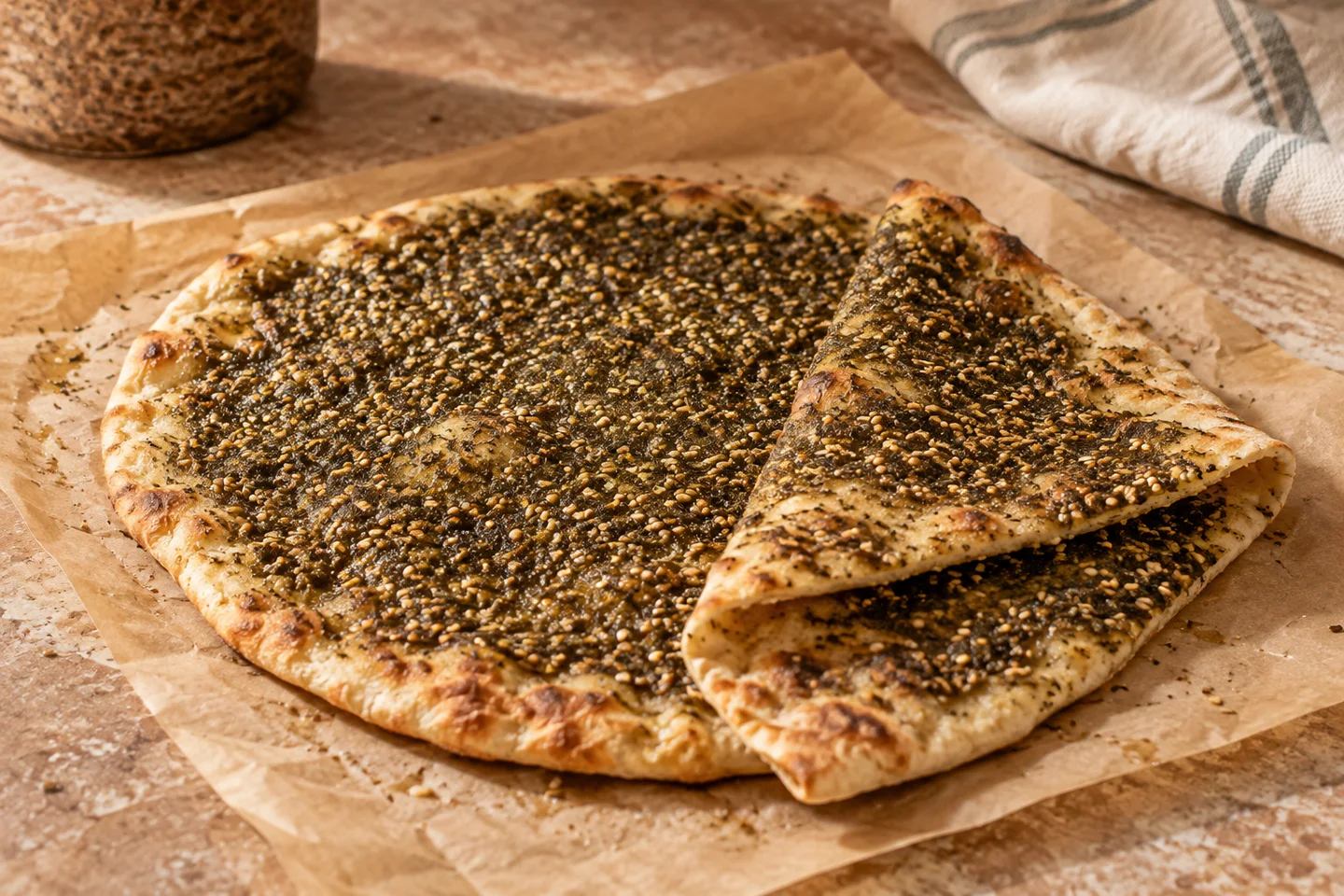
Start with the aroma. The warm scent of bread meets something greener and sharper: herbs, sesame, a little tang. Before the first bite, a man’ousheh with zaatar has already made its introduction. It is an inviting way into Lebanese food, with enough character in a single round of bread to reward a little attention.
Man’ousheh belongs to Lebanon’s breakfast repertoire and its neighbourhood bakeries. Food writer Barbara Abdeni Massaad devoted an entire cookbook to it, exploring more than seventy recipes. That breadth is a useful starting point: one familiar name can hold many possibilities.
What zaatar brings
Zaatar can name both an aromatic herb and the mixture made with it. A Lebanese heritage inventory describes dried herbs combined with sumac, toasted sesame and salt, stored among the provisions known as mouneh. On a man’ousheh, the mixture meets olive oil and bread.
Taste it slowly and the ingredients seem to take turns. The herbs bring fragrance, the sesame a toasted note, the sumac a bright acidity. Oil gathers those flavours together. Against them, the bread feels gentle and generous. There is pleasure in that balance: a topping with plenty to say, and dough that gives every part of it room.
Tomatoes, cucumber, olives, mint and labneh appear among the accompaniments recorded by UNESCO. Each offers another contrast: cool against warm, crisp against soft. A small piece of the zaatar bread itself is a fine place to start, before exploring what else is on the table.
The work behind a simple breakfast
UNESCO’s account describes fingertips pressing the dough and skills passing from parents to children. In 2023, it inscribed the culinary practice on its Representative List of the Intangible Cultural Heritage of Humanity. It also records the morning gatherings called sobhhiyé.
These details invite a different kind of attention at the table. Look at a round of bread and think about the hands that have worked it. Someone has judged its readiness, handled its softness and watched its colour. What arrives in a moment carries the time and concentration that made it possible.
A breakfast can be modest and still deserve this care. Its appeal does not depend on an elaborate presentation. The small decisions are enough: the feel of the dough, the spread of the topping, the point at which the bread is ready to eat.
Room for the morning
There is a lovely invitation in bread that asks to be torn: take a piece, make yourself comfortable, stay a little. A shared breakfast leaves space for pauses as well as conversation. Another bite can wait until a story has reached its end.
You do not need a grand occasion to approach food this way. Begin with something warm, notice what you are tasting and give the people beside you your attention. A man’ousheh offers a delicious place to begin.