
Planning a Lebanese buffet for a reception
From the first arrivals to the last toast: a practical guide to the food, flow and service of a larger gathering.
In this story
A reception buffet is part of the event’s rhythm. Guests may arrive together after a seminar, drift in throughout an evening or sit down at a fixed time. The right setup begins with that programme.
For a company reception or a private celebration in a hall, planning the space and service is just as useful as choosing the food. These are the points to settle with your venue and caterer.
Share the programme first
Give the catering team the arrival time, speeches, meal window and expected finish. Explain whether people will be standing, seated or moving between the two. A short conference break needs a different serving rhythm from an evening reception.
Confirm the guest count and describe the space. A floor plan or a few current photographs help identify where a buffet and bar could sit, how deliveries enter and what kitchen facilities are available.
Plan a clear route around the table
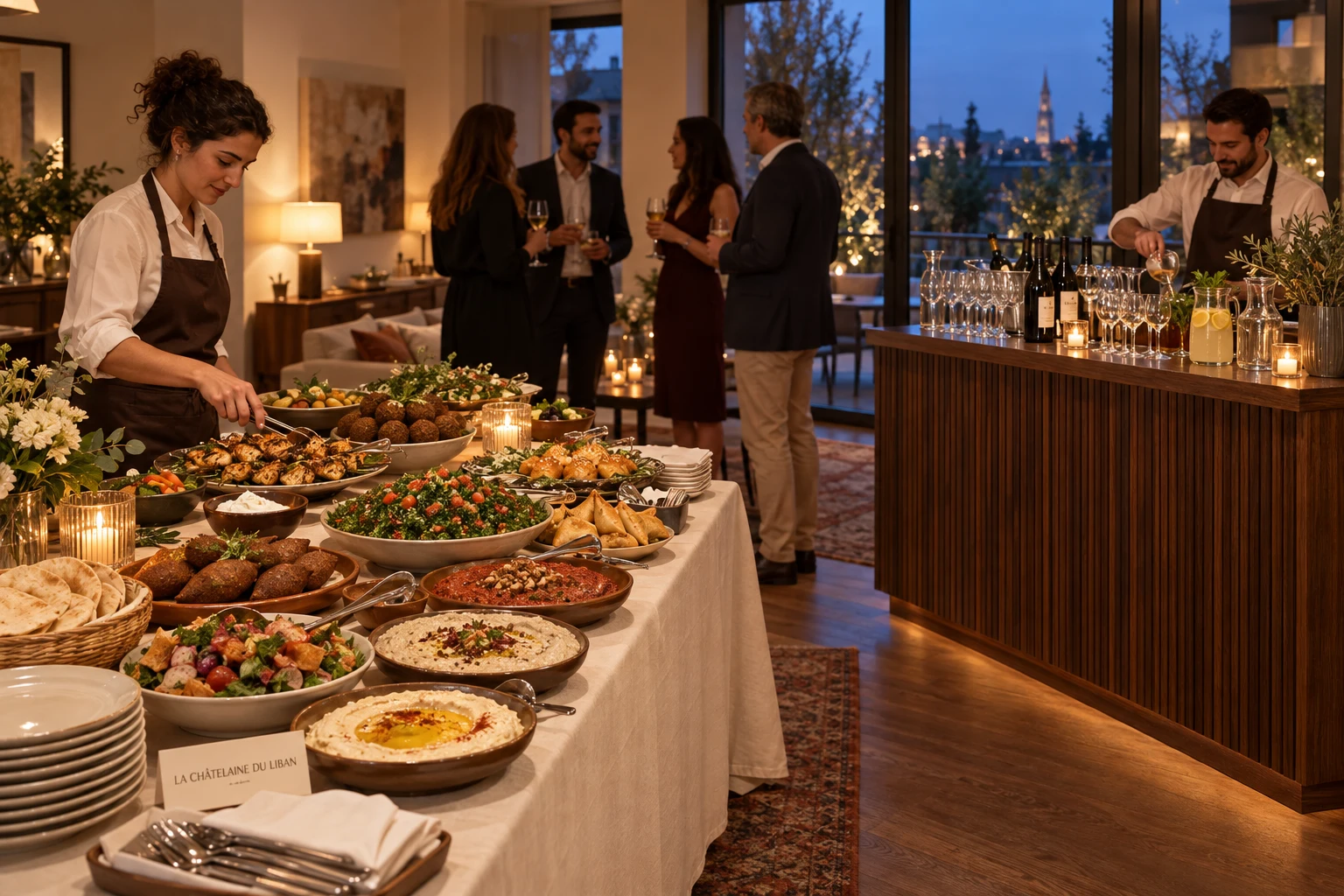
Think through the journey from plates to cold mezze, salads, bread and hot dishes. Leave room for serving utensils and for people to step aside. At a larger event, discuss whether more than one serving point would make sense.
A separate drinks area can keep people collecting glasses from blocking the food. Keep accessible routes clear and agree the layout with the venue rather than assuming every table can move.
Build a balanced spread
A Lebanese buffet can combine creamy dips, bright salads, warm mezze and grilled dishes. Variety works best when it is planned around the guests and how they will eat. Ask which dishes suit a standing reception and which are more comfortable at a seated meal.
Collect dietary requirements early. Agree clear dish information and how questions will be answered during service. Allergies need a direct conversation about ingredients and preparation; a menu label alone is not enough.
Agree what the service includes
Confirm who supplies tables, linens, crockery, glassware, serving equipment and any hot-holding equipment. Ask separately about setup, serving staff, bar service, clearing and collection. These details should appear in the proposal, with the responsibilities of the venue and caterer clearly separated.
If you want a bar, share the drinks you have in mind and the hours it should operate. The illustrations on our events page are starting points for discussing a layout; the final setup is agreed for your venue.
Bring the brief together
Send the date, venue, approximate guest count, programme and budget range, together with any dietary needs or services you would like. We can then discuss availability and a proposal for your gathering. A submitted enquiry begins that conversation; it does not reserve the date.